Using RS485 Current, Position and Speed Control on M0601C-111
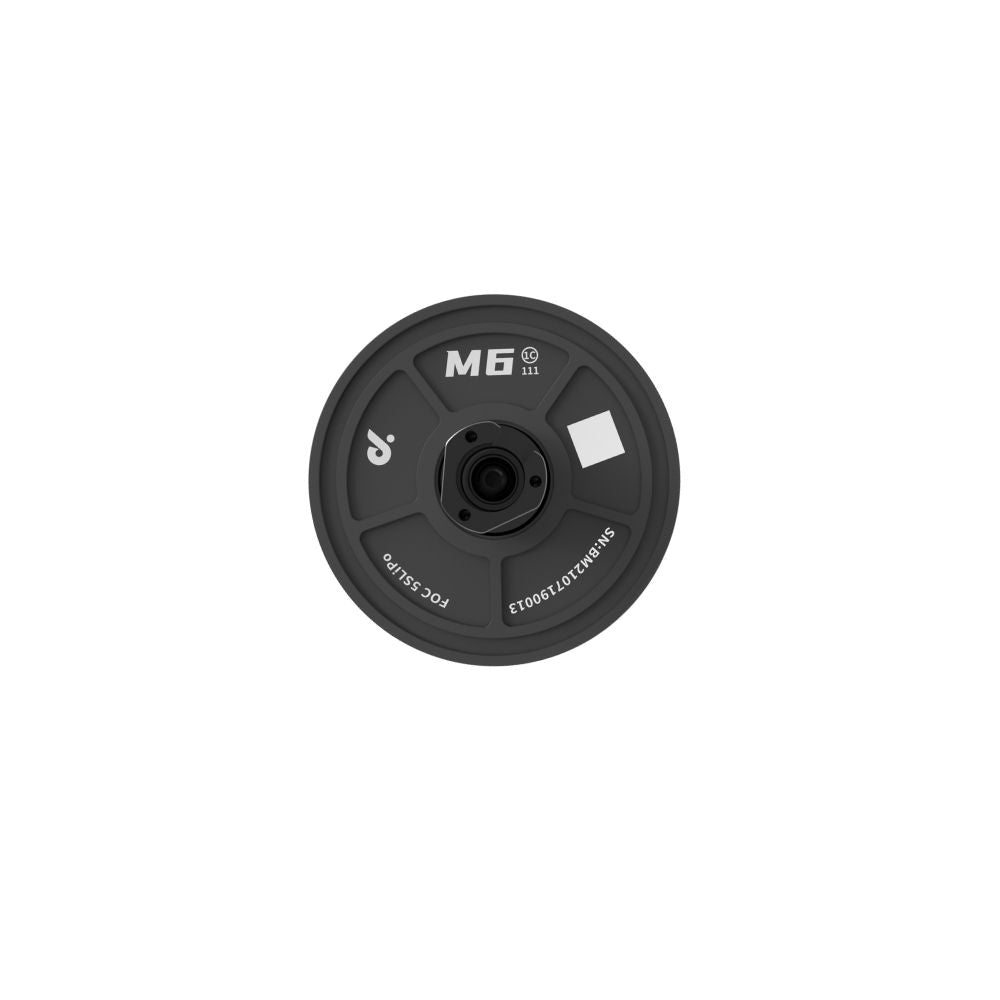
The M0601C-111 supports RS485 communication for current, position, and speed control, allowing accurate actuator management through a single serial interface. With closed-loop feedback, users can adjust motion parameters, read operating status, and connect multiple devices through one RS485 network. The actuator provides flexible control for robotics, automation equipment, and precision motion systems where stable positioning and adjustable torque are required.
RS485 communication allows the M0601C-111 to exchange commands and feedback data with a host controller such as a microcontroller, PLC, or industrial computer. Compared with basic PWM control, RS485 provides direct access to internal parameters and supports two-way communication.
A typical RS485 connection includes:
| Connection | Function |
|---|---|
| RS485-A | Differential signal line A |
| RS485-B | Differential signal line B |
| VCC | Power supply |
| GND | Ground reference |
The RS485 standard has been widely used in industrial systems since its introduction in 1983 because it supports long-distance communication and strong resistance to electrical interference. A single bus can connect multiple devices, and each actuator can be assigned an individual address for independent control.
A properly configured RS485 network can support multiple M0601C-111 units while reducing wiring requirements compared with individual control connections.
The communication process starts when the host controller sends a command packet containing the device address, control instruction, parameter data, and verification information. The actuator receives the packet, checks the command format, performs the requested operation, and returns feedback data.
Typical RS485 data exchange includes:
| Data Type | Purpose |
|---|---|
| Target position | Move actuator to a specified angle |
| Target speed | Maintain a required rotation speed |
| Target current | Adjust motor torque output |
| Status feedback | Read operation condition |
| Error information | Identify abnormal conditions |
For applications requiring precise movement, position control is commonly selected. The M0601C-111 uses feedback from its internal sensor system to compare the requested position with the actual position and adjust motor output.
The position error can be described as:
Position error = Target position - Actual position
When the difference between target and actual position decreases, the actuator reduces output automatically until the required position is reached. In practical systems, closed-loop position control can achieve repeatability levels within a few degrees depending on mechanical design, load conditions, and parameter settings.
Position control is suitable for robotic joints, camera platforms, laboratory equipment, and automated mechanisms where accurate movement is required.
Position control performance depends on several parameters:
| Parameter | Effect |
|---|---|
| Feedback resolution | Determines measurement accuracy |
| Control frequency | Affects response speed |
| Mechanical load | Influences movement stability |
| Acceleration setting | Changes motion smoothness |
For applications requiring force adjustment, current control provides a different approach. Motor current is directly related to torque output, allowing the M0601C-111 to regulate the force applied by the actuator.
The relationship between motor torque and current is:
T = Kt × I
where T represents torque, Kt represents the motor torque constant, and I represents current.
Current control is useful in systems such as robotic grippers, adjustable mechanisms, and force-sensitive devices. When external resistance changes, the controller can modify current output to maintain the required force level.
An integrated RS485 motor solution combining communication, feedback, and control functions can simplify system design by reducing external electronics and allowing software-based parameter adjustment.
The M0601C-111 can be used as an integrated RS485 motor in applications where developers need direct communication between the motion controller and actuator.
Speed control provides another operating mode for continuous rotation or controlled movement. Instead of focusing on a final position, speed control maintains a target rotational velocity through feedback adjustment.
The actuator measures actual speed and compares it with the requested value. If the speed changes because of load variation, the controller adjusts motor output to maintain stable operation.
Common speed control applications include:
| Application | Reason for Using Speed Control |
|---|---|
| Conveyor mechanisms | Maintain consistent movement |
| Rotating platforms | Keep stable rotation rate |
| Automated tools | Control working speed |
| Test equipment | Maintain repeatable operation |
In a combined control system, current, speed, and position control can work together. A robotic system may use position control during movement, speed control during travel, and current control when contact with an object occurs.
Different control modes allow engineers to select the most suitable method according to mechanical requirements instead of using one fixed control method for all situations.
The RS485 command structure also allows software adjustment without changing hardware. Developers can modify parameters such as target position, speed limit, current limit, and operating mode through communication commands.
A typical control sequence includes:
-
Assign actuator address.
-
Configure RS485 communication settings.
-
Select control mode.
-
Send motion commands.
-
Read feedback information.
-
Adjust parameters when required.
The M0601C-111 can be integrated into systems containing multiple actuators. For example, a robotic platform with 6 or more motor units can use one RS485 communication line instead of separate signal cables for each actuator.
Multi-device RS485 networks commonly require:
| Requirement | Description |
|---|---|
| Unique ID address | Prevent communication conflicts |
| Matching baud rate | Ensure correct data exchange |
| Proper wiring | Maintain signal quality |
| Error checking | Reduce incorrect commands |
The flexibility of RS485 control makes the M0601C-111 suitable for modern automation applications. Engineers can combine accurate positioning, speed adjustment, and torque regulation in one actuator platform.
Compared with traditional motor control methods that require separate controllers and feedback modules, RS485-based control reduces system complexity and provides direct access to operating information. With proper configuration, the M0601C-111 can support applications ranging from robotic mechanisms to industrial motion equipment requiring reliable and adjustable control.